Since I am still having computer woes, I'm taking the lazy option again today. I once did an interview with a PI, which was in the wonderful Crimespree Magazine. So I thought I would post that in lieu of a proper blog post today.
Picture the scene - the backstreet office building looks unloved and dejected. You walk up the dimly lit staircase and inhale the scents which hint at bodily functions you'd rather not dwell on too closely. Actually, it's more than a hint - the smells take you by the throat and assault your nose like a world class boxer. The door to the Private Eye's office is battered and scuffed and the letters on the opaque glass spell out hopelessness and the end of the line, as well as the words 'Pr vate Inve tiga or' in peeling black letters. Inside the office the decor could politely be described as minimalist and eclectic - an ancient desk decorated with scratches, heel marks, cigarette burns and the odd bullet hole, a couple of mismatched and uncomfortable chairs, a coffeepot standing on a gunmetal grey filing cabinet in the corner. The Venetian blind which should be on the window is lying in a heap on the floor, but it doesn't matter because the streaks of dirt on the window filter the light like a moth-eaten blackout curtain.
Behind the desk sits the world-weary, lone-wolf PI we know and love from crime fiction - a cigarette in one hand, a bottle of Jim Beam in the other, his feet up on the desk. He's wearing a rumpled suit, shoes that have seen better days but so long ago that they don't remember them, and a face that has the lived in look of a doss house. There's a knock at the door and the beautiful and mysterious dame walks in and spins the hard-bitten PI a sob story he can't refuse. Within hours the PI has been beaten up, shot at, warned off by the police and stumbled over a dead body or two.
Now rewind. Erase all those pictures from your head... well, all except one maybe.
Here's the reality. I interviewed the founder of an investigation firm with an office in a town not far from Glasgow - let's call him Sam, and let's call his Company Spade Investigations. First of all, he doesn't call himself a PI - they're Corporate Investigation, Risk and Security Consultants. The office is an upper conversion of a sandstone building in a business street. There are seven rooms including a boardroom and training room, a technical and forensics room, and a surveillance room.
I was intrigued by the technical and forensics room so I asked Sam what went on there and he told me they use a lot of technical equipment, including cameras for covert installations, GPS tracking systems, video and audio surveillance equipment, counter surveillance and debugging. “One of our directors - Q, as we call him - walks around wearing a white jacket, with pens in the pocket, and thick glasses; talking about gadgets.”
They also carry out computer forensics work - retrieving hidden and deleted data from hard drives, and from the memory cards from digital cameras. As well as being used to investigate pedophiles it's also invaluable from a commercial point of view - fraud, embezzlement, industrial espionage, theft of intellectual property: “We can investigate cases where executives have left companies and there are covenants in place to restrict practices.”
The firm has 22 employees, including 4 administration staff and they have offices in Scotland and Northern Ireland. They have their own brochures, issue a regular newsletter, hold corporate events and, believe it or not, have just hired a PR firm. In fact, before me, Sam had just been interviewed by two local papers.
Most of the investigators either have police or military backgrounds. Sam's own background is military and I asked him how he'd got started in the PI game:
“About 17 years ago I decided to contact as many investigation companies as I could and one of them gave me a job. I worked for a year and a half as an investigator until I decided I could do it better myself.”
So he did. He formed Spade Investigations 15 years ago. Initially, there was a fair amount of the traditional PI type work - tracing people, tailing people and a lot of private work, but they gradually built up the corporate side of the business and 10 years ago they started to specialise. They still do the private work though, never turning down any job if they have the capacity to take it on. The variety of work is very wide - “ranging from basic trace enquiries - we had one request - from an American who was trying to contact someone he'd stayed with in 1939, just before the war - to the other end of the scale of major corporate theft. We might send someone in undercover, install covert cameras, and have 4-6 guys on a surveillance plot.” The cameras would be installed at night or, if the workplace is open 24 hours, then they send people in dressed as electricians to install the equipment.
And did they find the man from 1939? “Yes, surprisingly.” says Sam, “Sometimes it's easier to find someone who's been away from the place a long time than it is to find someone who just moved recently. The best period to try and trace someone is if they've been away from a place for a year or so. It's more difficult where they've been away less than a year, or more than 20.”
“We have lots of interesting cases but to me it's a job. It's actually one exciting job after another - if you came in and looked through the files you'd find lots of things to interest you, but its difficult for me to pinpoint one because I do it every day.”
Spade Investigations carry out work for insurance companies and legal firms, and also any company with a lot of employees or stock. They investigate personal injury type claims “lifestyle reports on individuals - for example if someone's working when they're not meant to be working.” Some of this type of case takes them abroad. Sam's been to Spain on personal injury cases for example. “You're working hard but it's a different environment. Your subject may be going out for a meal at 10pm. So it's different and there's a bit of a holiday feel to it. It's quite glamourous sometimes.”
Building up a list of clients is very difficult because of the nature of the work. “You have to very gradually build up the trust and hope you can get repeat work.” Word of mouth is important, and having a good reputation is vital.
The company also does “close protection work, hostile environment training - we did some for people going out to Iraq - safety awareness, anti-ambush drills.”
Having been mugged three times, I wondered if I could get some tips from an expert on personal safety. Sam asked me a couple of questions about where I live, what I do for a living, where I go and his advice was:
“Carry a panic alarm - always. Be aware of your surroundings. Before you leave your flat, look out of the window and see who's about. For example, in cases of stalking, if someone's watching you, then YOU should be able to see THEM. Make sure you have nothing valuable on display when you go out and have your handbag positioned across your body. You might want to carry two purses - one which is viewable and one which is hidden, then you can give up the obvious one. Stick to well lit routes with people about, and try and be within shouting distance of people at all times. Never take the lanes. Always have a safe place to run to.”
So how does someone set up as a Private Investigator?
In the US most of the States require PIs setting up in business to be licensed. At present, there is no requirement for PIs in Alabama, Alaska, Colorado, Idaho, Mississippi, Missouri, Pennsylvania, or South Dakota to be licensed but many of the cities and counties in those states may have their own licensing requirements. It would appear that all you need to be licensed as a private investigator is to be 18 years of age, of sound mind and with a clean criminal record (how reassuring). In some states there's also a requirement for an applicant to serve an apprenticeship with a licensed investigative firm and/or pass an exam.
In the UK there's no requirement to be licensed at present, although Sam explains that this is going to change -- “legislation is currently coming in to English law which covers wheel-clampers and door stewards. We expect legislation in England to cover investigators in 2006 and Scotland shortly after that. Until then, anyone can start up in business as a Private Investigator.”
As for training, well, Spade Investigations are ahead of the game. “Training's not obligatory but should be undertaken by anyone who wants to stay in business” was Sam's opinion. The Company in fact provide training to other investigators. They recently held a surveillance course where the morning was theory and the afternoon was spent out on surveillance, being shown the equipment, and mobile surveillance in action. When I wistfully said I'd love to go on something like that Sam told me I could - they have another course in the next few months, and anyone can go on it. I asked him to sign me up.
As the boss of the Company, Sam's day is taken up mostly with looking after the business side of things - marketing and PR, accountants, bank. The Investigators' routine is different “They might start around 6 or 7am if they're on surveillance, either following the person, or at the location that's being watched, and they'll finish about 3 or 4 in the afternoon depending on requirements.” Usually there are between 2 and 4 people on one surveillance. All the Company's vehicles have communications fitted and the investigators have all their equipment for the day with them - covert camera, body camera, Palm recorder, change of clothes, binoculars, and a kit to enable them to put video equipment in an empty car in locations where an occupied vehicle would stand out. They also have food and drink of course, and my delicate question about necessary bodily functions was met with an “I'll leave that to your imagination.”
Real life professional investigators like Sam have a good relationship with police on the whole. “Some policemen realise it's a good career to go into after leaving the police force. Some still perceive us as doing the job which the police should be doing. But this really isn't the case. The police don't have the time to investigate everything and we deal with the sort of cases they wouldn't really get involved in.” Would he ever be called upon to solve a murder? “Definitely not - that's a job for the police.”
I asked Sam what the best and worst aspects of the job were:
“Best - achieving something for the client that has been quite hard to achieve for them; maybe a difficult situation where we've really put ourselves out to get a result. Worst - a client who doesn't have an appreciation of all that we've done.”
A lot of their work is potentially dangerous “ but we know how to turn and run. People don't know who we are so they don't know what they're dealing with. But if someone starts to guess we're onto them then we'll pull out.”
I asked Sam if he had one piece of advice for a budding PI looking to start out in the business:
“Do your homework about the market and don't assume that there's money to be made. If you're not a business minded person - don't do it.”
And what about the attributes of a good investigator:
“Bags of integrity, bags of commitment, a good sense of humour and staying power. We'd also look at previous training and experience.”
By this point in the interview, I was contemplating a career change and asked Sam if the firm had any female investigators. The answer was no, but not because they didn't want one:
“I've tried my damnedest to get one. I'd love to employ one - a female investigator would be a big benefit to the company provided she fulfilled the minimum requirements.”
I asked if he'd ever thought of employing a short, fat, unfit, middle aged woman with a good sense of humour. He was kind enough to say that none of that would matter but my biggest stumbling block would be that I don't drive. “You need to be strong on mobile surveillance. If you're chasing someone you need to have quick reactions on the roads.” I had a fleeting thought of getting on the Number 62 Bus and saying to the driver “Follow that car”, but it looks as though the life of a PI is, sadly, not for me.
Sam doesn't read detective fiction, and he doesn't have time to watch TV, too busy walking the walk, but I asked him about the traditional view of PIs:
“That preconceived idea of the 1970s - smoke filled offices and overcoats - isn't true; although there is still an element of that, where someone is maybe a one man organisation and his old pals from the police force will pop in for a cigarette and a chat. But we're so high tech and PR aware that it's really not like that at all. We're so far advanced and our equipment is more James Bond. For the public, the work of the Investigator often conjures up romantic images - a lot of which are a load of rubbish.”
So what about that beautiful and mysterious female client? Does she ever walk into the office?
“Sometimes,” said Sam, “but not very often.”
And on that note, I let him go back to walking those mean streets.
Friday, 12 February 2010

Wednesday, 10 February 2010
Revenge of the Killer Bee
Well, I was going to leave it a few days before posting this, and get back to the aim of the blog which is to post about Scottish crime fiction. However, I have had a traumatic evening and no time to do a proper post. My lovely little teeny tiny laptop just flashed up the blue screen of not-very-well when I switched it on. I've lost some documents (not much fiction as I'm very careful about e-mailing it to myself when I write anything. However, I've lost an article I was writing on my trips to Alaska and, worst of all, loads of photos. I'm gutted about that. Anyone have any suggestions for a good place online to store photos?
So I'm back using my clunky old laptop that takes about half an hour to load up, and I'm not joking. So I thought I would just post about killer bees to cheer myself up.
So, as with yesterday's post, this was another conference with work. The conference centre we were staying in was a stately home which was absolutely gorgeous - if you could ignore the not particularly unobtrusive 1970s grey concrete addition which is where the bedrooms and the lecture rooms were. The views were gorgeous - all rolling countryside and lots of green stuff (that wasn't graffiti and mouldy kebabs). Beautiful scenery and nature and fresh, clear air. Well, unless you had my bedroom of course. My bedroom was in a cul-de-sac which overlooked four skips, and a multi-story car park. And the skips were full. So the beautiful scenery and fresh clean air were out. It was like being home. However, I did have some nature. Too much of it in fact. As well as the rat which I'm sure I heard scrabbling round the skips at 3am, there was the Killer Bee the size of a golf ball which decided to come and visit me while I was doing my ironing. It wasn't so much a bee, as a hawk.
So I'm back using my clunky old laptop that takes about half an hour to load up, and I'm not joking. So I thought I would just post about killer bees to cheer myself up.
So, as with yesterday's post, this was another conference with work. The conference centre we were staying in was a stately home which was absolutely gorgeous - if you could ignore the not particularly unobtrusive 1970s grey concrete addition which is where the bedrooms and the lecture rooms were. The views were gorgeous - all rolling countryside and lots of green stuff (that wasn't graffiti and mouldy kebabs). Beautiful scenery and nature and fresh, clear air. Well, unless you had my bedroom of course. My bedroom was in a cul-de-sac which overlooked four skips, and a multi-story car park. And the skips were full. So the beautiful scenery and fresh clean air were out. It was like being home. However, I did have some nature. Too much of it in fact. As well as the rat which I'm sure I heard scrabbling round the skips at 3am, there was the Killer Bee the size of a golf ball which decided to come and visit me while I was doing my ironing. It wasn't so much a bee, as a hawk.
We arrived about 5pm and arranged to meet in the bar at 6, so I had a quick shower and was busily ironing, while wearing only my underwear (this is probably too much information, but it's relevant to the story). I'd opened the window as it was really warm (I couldn't decide on the lesser of two evils between a boiling hot room, or the delightful smell of rotting garbage in the skips). All of a sudden I heard this really loud buzzing noise and this Killer Bee the size of a tennis ball came flying in the window straight towards me.
Now, I don't know whether you've ever had a Killer Bee the size of a basketball up in your face singing "Come and have a go if you think you're hard enough" but it's a bit scary. So I screamed like a big girl and lashed out. Unfortunately, it slipped my mind that I was doing the ironing at the time so I ended up flailing around with a hot iron (set to cotton - this fact seems irrelevant but I can assure you it will be important later). The iron was steaming, and the Bee wasn't best chuffed either. If it had been buzzing angrily before, it now turned it up a notch. And it was so close to my face that I could smell its breath. And, let me tell you, it hadn't been eating honey. I think it had been bin diving. It was fixing me with its beady little eyes, and drawing back its harpoon-like sting, when one of my sweeps with the iron caught it and it fell to the floor.
Via my foot. Just before the bee the size of Liechtenstein landed on my foot, I jumped backwards, knocking over the ironing board which, in turn, knocked the chair towards the window. Since it looked as though the chair back was going to crash into the window I jumped forward to grab the chair, overbalanced into the television, turning it on with my elbow. The ironing board crashed to the ground, I fell onto the bed, the chair in one hand and the hot iron (remember the hot iron?) in the other. Unfortunately, since I had several things to think about at once, I neglected to hold the iron away from anything it might damage and it ended up burning a hole in my bra (the bra was silk, the iron, if you cast your mind back, was set to cotton). Even more unfortunately, it just so happened that I was wearing it at the time. Ouch.
Silence descended, apart from the steaming of the iron, the occasional weak buzz from the bee, and the gentle sizzling of my flesh. After composing myself and putting the iron down safely on something that wasn't attached to me, I picked the bee up using my conference programme and gently hurled it out of the window into the skip below. Then I finished getting ready and went down to the bar.
When I walked in, the conversation stopped and they all turned round and looked at me. One of my colleagues said "Donna, I believe you're in the room next door to me."
"I am? How do you know that?" I said.
"Well, it might have been the shouts of 'bugger off bee' followed by ten minutes of crashes and screams that gave it away. It couldn't be anyone else really."
So there you have it.
Oh, and despite my mum's protests I am doing a charity zipslide... errrr... slide. Should anyone get the urge to sponsor me you can find the details, including photos of last year's event, here.
Tuesday, 9 February 2010
The Building That Wouldn't Let Me Leave
I was at a conference this weekend so am a tad behind (seems to be my permanent state this year), so, since someone reminded me of the time when I got my leg stuck in a banister at a conference, I thought I would do a lazy blog post and tell the story.
This conference had been arranged for some time. The building we were having it in is a club/restaurant place in an old building. What we didn't know is that, in the time between the conference being booked and being held, the owners of the building decided to have it completely overhauled, so when we arrived there were workmen, dustsheets and paint tins all over the place.
This place is a big old building on about 4 floors with a huge stone staircase and high ceilings - dark, old and pretty scary when you're the only people in the whole place, apart from the workmen and a couple of skeleton staff (not literally skeletons, but I wouldn't have been surprised to have heard the clanking of chains and seen the odd ghostly nobleman wandering round adjusting his codpiece). Because our course had been arranged for a while the building's management had decided to go ahead with it, but, other than our group, the rest of the building was empty. No problem.
The course was going well and, during the break at lunchtime, I went out into the hallway to use my phone. I was standing on the staircase, talking on the phone, and I had shoved one of my knees in between the ornate metal uprights that made up the banister of the staircase. At the end of the phone call, I switched my phone off and tried to move away. Whoops - my knee was stuck. I whimpered, tugged at my knee and swore. I must have looked like a modern-day Mrs Rochester as I flailed on the staircase moaning "Help....help."
Eventually, I managed to prise myself free - but not before one of the builders had run up the staircase to see what was wrong. Just in time to see my leg pop out of the banister like an overstuffed sausage. I waved gaily and rather hysterically at him, before running back into the room where the meeting was being held, my face rather flushed.
By the end of the day I'd calmed down and I stayed behind at the end to chat to the course trainer about something. We left the room - he went downstairs and out of the building, I decided I needed to go to the loo before going home. So I did. And there I was, happily going about my business, when I heard a noise that sounded like the main door leading to the loos being slammed. I thought nothing of it... until I came to leave. The door leading out of the ladies was locked. I was trapped. I had visions of the builders going home, only to resume work in a couple of months time, and finding my skeleton lying on the floor, my last message scrawled in lipstick on the mirror 'I wish I had more lipsti...'
I knocked tentatively on the door, feeling just a tad silly. No response. I knocked a bit harder. Silence. I swore for 5 minutes before remembering I was a modern, independent woman. I pulled out my trusty mobile phone and dithered over whether I should dial 999 or ring my Dad. Since my Dad was 400 miles away and I really wanted to get home for my tea, and imagining that the fire brigade had more important things to worry about, I dialed the switchboard of the building I was in. After what felt like half an hour the phone was picked up.
"Oh thank God", I said "please could you come and let me out of the toilet."
Silence on the other end of the phone, then a tentative voice "Errrr.....who is this?"
"Well, my name's Donna, but that REALLY won't mean anything to you. I'm stuck in the loo, please could you let me out."
"Where are you exactly?"
"I'm standing by the sink."
"No...I mean which FLOOR are you on."
"Oh, right....ummmm, the floor where the training course was today."
Silence again. "Is that the woman who had her leg stuck in the banister by any chance?"
Yes indeed, my knight in shining overalls was the same workman who'd seen me stuck in the banister earlier that day. I like to think his shoulders were shaking with the cold as he freed me and wished me a safe journey home, but I'm afraid that it was laughter.
Actually, that reminds me of another conference story when I was attacked by a Killer Bee. But that one makes me look even more ridiculous (is that possible?) so maybe I should just draw a discreet veil over that one.
This conference had been arranged for some time. The building we were having it in is a club/restaurant place in an old building. What we didn't know is that, in the time between the conference being booked and being held, the owners of the building decided to have it completely overhauled, so when we arrived there were workmen, dustsheets and paint tins all over the place.
This place is a big old building on about 4 floors with a huge stone staircase and high ceilings - dark, old and pretty scary when you're the only people in the whole place, apart from the workmen and a couple of skeleton staff (not literally skeletons, but I wouldn't have been surprised to have heard the clanking of chains and seen the odd ghostly nobleman wandering round adjusting his codpiece). Because our course had been arranged for a while the building's management had decided to go ahead with it, but, other than our group, the rest of the building was empty. No problem.
The course was going well and, during the break at lunchtime, I went out into the hallway to use my phone. I was standing on the staircase, talking on the phone, and I had shoved one of my knees in between the ornate metal uprights that made up the banister of the staircase. At the end of the phone call, I switched my phone off and tried to move away. Whoops - my knee was stuck. I whimpered, tugged at my knee and swore. I must have looked like a modern-day Mrs Rochester as I flailed on the staircase moaning "Help....help."
Eventually, I managed to prise myself free - but not before one of the builders had run up the staircase to see what was wrong. Just in time to see my leg pop out of the banister like an overstuffed sausage. I waved gaily and rather hysterically at him, before running back into the room where the meeting was being held, my face rather flushed.
By the end of the day I'd calmed down and I stayed behind at the end to chat to the course trainer about something. We left the room - he went downstairs and out of the building, I decided I needed to go to the loo before going home. So I did. And there I was, happily going about my business, when I heard a noise that sounded like the main door leading to the loos being slammed. I thought nothing of it... until I came to leave. The door leading out of the ladies was locked. I was trapped. I had visions of the builders going home, only to resume work in a couple of months time, and finding my skeleton lying on the floor, my last message scrawled in lipstick on the mirror 'I wish I had more lipsti...'
I knocked tentatively on the door, feeling just a tad silly. No response. I knocked a bit harder. Silence. I swore for 5 minutes before remembering I was a modern, independent woman. I pulled out my trusty mobile phone and dithered over whether I should dial 999 or ring my Dad. Since my Dad was 400 miles away and I really wanted to get home for my tea, and imagining that the fire brigade had more important things to worry about, I dialed the switchboard of the building I was in. After what felt like half an hour the phone was picked up.
"Oh thank God", I said "please could you come and let me out of the toilet."
Silence on the other end of the phone, then a tentative voice "Errrr.....who is this?"
"Well, my name's Donna, but that REALLY won't mean anything to you. I'm stuck in the loo, please could you let me out."
"Where are you exactly?"
"I'm standing by the sink."
"No...I mean which FLOOR are you on."
"Oh, right....ummmm, the floor where the training course was today."
Silence again. "Is that the woman who had her leg stuck in the banister by any chance?"
Yes indeed, my knight in shining overalls was the same workman who'd seen me stuck in the banister earlier that day. I like to think his shoulders were shaking with the cold as he freed me and wished me a safe journey home, but I'm afraid that it was laughter.
Actually, that reminds me of another conference story when I was attacked by a Killer Bee. But that one makes me look even more ridiculous (is that possible?) so maybe I should just draw a discreet veil over that one.
Monday, 8 February 2010
News, Reviews and Interviews From All OverThe Globe
The Decatur Daily likes Alexander McCall Smith's Scotland Street. While over in Jaipur, blog Gora! Gora! Gora has an excellent wrap-up of the final event. His passport will be getting loads of stamps this year as he is over in Minneapolis in April.
The Calcutta Telegraph questions Ian Rankin, who then talks to the Economic Times, The Hindu, and then to the Times of India about how there's even a crime in cricket. After all that talking, he'll be thirsty, so he'll be looking forward to this event at the Caledonian Brewery on March 4th then.
The Scottish Premier League quiz Christopher Brookmyre about his love of St Mirren. And, still on football, it may just be me but the phrase "The supporters from the north east were crammed into the Val McDermid Stand" strikes me as funny. And Val McDermid is also involved in this project to get older people reading and writing - I am trying to get my Dad to enter the competition.
Crime Beat in South Africa looks at cities as the backdrop for crime fiction, including Tony Black's Edinburgh.
Publishers Weekly enjoyed Ray Banks' NO MORE HEROES. And so they should - it's a brilliant read.
John Welsh in the Independent with an entertaining look at the perils of writing Irvine Welsh meets Jane Austen for the BBC.
M C Beaton is being read a lot recently. First of all, Joe Barone enjoys DEATH OF A VALENTINE, while the lovely Sally from Oz, reviews DEATH OF A CELEBRITY.
Gillian Galbraith visits North Berwick on February 25th,
And, finally, somebody thought that Stuart MacBride would be suitable reading for eight-year olds - without actually reading the book. Oh deary, deary me.
The Calcutta Telegraph questions Ian Rankin, who then talks to the Economic Times, The Hindu, and then to the Times of India about how there's even a crime in cricket. After all that talking, he'll be thirsty, so he'll be looking forward to this event at the Caledonian Brewery on March 4th then.
The Scottish Premier League quiz Christopher Brookmyre about his love of St Mirren. And, still on football, it may just be me but the phrase "The supporters from the north east were crammed into the Val McDermid Stand" strikes me as funny. And Val McDermid is also involved in this project to get older people reading and writing - I am trying to get my Dad to enter the competition.
Crime Beat in South Africa looks at cities as the backdrop for crime fiction, including Tony Black's Edinburgh.
Publishers Weekly enjoyed Ray Banks' NO MORE HEROES. And so they should - it's a brilliant read.
John Welsh in the Independent with an entertaining look at the perils of writing Irvine Welsh meets Jane Austen for the BBC.
M C Beaton is being read a lot recently. First of all, Joe Barone enjoys DEATH OF A VALENTINE, while the lovely Sally from Oz, reviews DEATH OF A CELEBRITY.
Gillian Galbraith visits North Berwick on February 25th,
And, finally, somebody thought that Stuart MacBride would be suitable reading for eight-year olds - without actually reading the book. Oh deary, deary me.
Sunday, 7 February 2010
What I Read In January
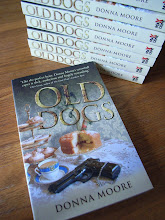
January was a busy month, what with editing OLD DOGS and doing the programming for Crimefest, so I didn't get as much read as I would have liked. But here's what I did read.
THE OSSIANS - Doug Johnstone
Published: 2008
Setting: Scotland
Protagonist: Connor Alexander
Series?: I presume it's a standalone
First Lines: '"Connor, I don't know why I let you drag me to the stupidest places."'
Indie guitar band The Ossians are on the verge of signing a major record deal and their lead singer Connor decides that now would be a good time to tour Scotland, going to some of the dreariest, bleakest places - in winter. Connor - self-destructive and full of himself - spends most of the tour drunk or high on a cocktail of drugs. But this is definitely not what you would typically consider a rock and roll lifestyle with its series of tedious gigs in seedy venues. And, unlike most tours (I would hope!) the tension mounts with drug dealers, stalkers and gun-toting Russian sub-mariners. I didn't like Connor at all - he's got a chip on his shoulder the size of a bag of King Edwards - but I really loved reading about him and wanted to know what would happen to him. Connor has led a pampered, rather empty, middle-class life and the tour seems to be a search for the holy grail of his own identity, as well as that of Scotland. A thought-provoking and fascinating read. And really good fun. I will definitely be looking out for more from this author.
BURIAL - Neil Cross
Published: 2009
Setting: England
Protagonist: Nathan
Series?: Standalone
First Lines: 'The doorbell rang. Nathan had a feeling - but he dismissed it, muted the TV and went to the door. There stood Bob; hunched over, grinning in the darkness and rain. Saying: "Hello, mate."'
Nathan is happily living his life when someone he would rather forget turns up to tell him that they're digging up the woods. You know then that Nathan has a secret. And a big one it is too. Jump back ten years or so and Nathan is working in an unfulfilling job on a late night talk show hosted by a has-been. He's also in an unfulfilling relationship which is on its last legs. So he decides to take his girlfriend to the annual party put on by his boss, before he dumps her. There he meets Bob - a weird guy he met once a few years before and things get out of hand in a particularly nasty way. The description of the crime is brutal and uncompromising and the book is a chilling and unsettling look at guilt, torment and restitution in a tortured mind.
RUSO AND THE DISAPPEARING DANCING GIRLS - R S Downie
Published: 2006
Setting: Britannia, AD117
Protagonist: Gaius Petreius Ruso
Series?: 1st in series
First Lines: 'Someone had washed the mud off the body, but as Gaius Petrieus Ruso unwrapped the sheet there was still a distinct smell of river.'
Ruso is an army medic with the Roman army in Britain. His family has huge debts, he has problems with his new hospital administrator, he's somehow managed to buy an injured slave girl, his house is full of mice and puppies, and someone is going around murdering dancing girls from a local house of ill repute. This is not my usual dark and twisted fare, but I really enjoyed it. The cast of characters is interesting and well-drawn, there are some lovely touches of humour, and I loved the historical details which are seamlessly included and don't feel like a history lesson. The setting is really well done and I am really glad I was leading a book discussion on this one, or I might not have picked it up.
THE CORONER - M R Hall
Published: 2009
Setting: Bristol
Protagonist: Jenny Cooper
Series?: maybe 1st in a series
First Lines: 'The first dead body Jenny ever saw was her grandfather's.'
Jenny Cooper is a lawyer getting over a traumatic divorce and wanting a break from family law, so she takes a job as Coroner after the death of the previous incumbent. Her predecessor's most recent cases were a 14 year old boy whose death was ruled as suicide while in custody in a secure training centre, and the apparent heroin overdose of a 15 year old girl. Jenny's curiosity is piqued by certain circumstances surrounding the two deaths, and she also becomes unconvinced that her predecessor died of natural causes. Jenny has her problems (including eating Temazepam like Smarties) and for the first half of the book things felt a tad slow, with too much dwelling on her personal circumstances, but things heat up in the second half, and the thoughtful depiction of a system overburdened with bureaucracy and corruption was interesting.
THE OSSIANS - Doug Johnstone
Published: 2008
Setting: Scotland
Protagonist: Connor Alexander
Series?: I presume it's a standalone
First Lines: '"Connor, I don't know why I let you drag me to the stupidest places."'
Indie guitar band The Ossians are on the verge of signing a major record deal and their lead singer Connor decides that now would be a good time to tour Scotland, going to some of the dreariest, bleakest places - in winter. Connor - self-destructive and full of himself - spends most of the tour drunk or high on a cocktail of drugs. But this is definitely not what you would typically consider a rock and roll lifestyle with its series of tedious gigs in seedy venues. And, unlike most tours (I would hope!) the tension mounts with drug dealers, stalkers and gun-toting Russian sub-mariners. I didn't like Connor at all - he's got a chip on his shoulder the size of a bag of King Edwards - but I really loved reading about him and wanted to know what would happen to him. Connor has led a pampered, rather empty, middle-class life and the tour seems to be a search for the holy grail of his own identity, as well as that of Scotland. A thought-provoking and fascinating read. And really good fun. I will definitely be looking out for more from this author.
BURIAL - Neil Cross
Published: 2009
Setting: England
Protagonist: Nathan
Series?: Standalone
First Lines: 'The doorbell rang. Nathan had a feeling - but he dismissed it, muted the TV and went to the door. There stood Bob; hunched over, grinning in the darkness and rain. Saying: "Hello, mate."'
Nathan is happily living his life when someone he would rather forget turns up to tell him that they're digging up the woods. You know then that Nathan has a secret. And a big one it is too. Jump back ten years or so and Nathan is working in an unfulfilling job on a late night talk show hosted by a has-been. He's also in an unfulfilling relationship which is on its last legs. So he decides to take his girlfriend to the annual party put on by his boss, before he dumps her. There he meets Bob - a weird guy he met once a few years before and things get out of hand in a particularly nasty way. The description of the crime is brutal and uncompromising and the book is a chilling and unsettling look at guilt, torment and restitution in a tortured mind.
RUSO AND THE DISAPPEARING DANCING GIRLS - R S Downie
Published: 2006
Setting: Britannia, AD117
Protagonist: Gaius Petreius Ruso
Series?: 1st in series
First Lines: 'Someone had washed the mud off the body, but as Gaius Petrieus Ruso unwrapped the sheet there was still a distinct smell of river.'
Ruso is an army medic with the Roman army in Britain. His family has huge debts, he has problems with his new hospital administrator, he's somehow managed to buy an injured slave girl, his house is full of mice and puppies, and someone is going around murdering dancing girls from a local house of ill repute. This is not my usual dark and twisted fare, but I really enjoyed it. The cast of characters is interesting and well-drawn, there are some lovely touches of humour, and I loved the historical details which are seamlessly included and don't feel like a history lesson. The setting is really well done and I am really glad I was leading a book discussion on this one, or I might not have picked it up.
THE CORONER - M R Hall
Published: 2009
Setting: Bristol
Protagonist: Jenny Cooper
Series?: maybe 1st in a series
First Lines: 'The first dead body Jenny ever saw was her grandfather's.'
Jenny Cooper is a lawyer getting over a traumatic divorce and wanting a break from family law, so she takes a job as Coroner after the death of the previous incumbent. Her predecessor's most recent cases were a 14 year old boy whose death was ruled as suicide while in custody in a secure training centre, and the apparent heroin overdose of a 15 year old girl. Jenny's curiosity is piqued by certain circumstances surrounding the two deaths, and she also becomes unconvinced that her predecessor died of natural causes. Jenny has her problems (including eating Temazepam like Smarties) and for the first half of the book things felt a tad slow, with too much dwelling on her personal circumstances, but things heat up in the second half, and the thoughtful depiction of a system overburdened with bureaucracy and corruption was interesting.
Thursday, 4 February 2010
It's All Alexander, Except For The Bits That Are Ian
Loads and loads about Alexander McCall Smith and Ian Rankin today.
The Independent with a brief review of Alexander McCall Smith's TEA TIME FOR THE TRADITIONALLY BUILT, while the author himself "defends his upbeat view of Africa". And more here on his appearance at the Jaipur Literature Festival. And the Indian Express on the Number 1 Ladies Man.
From the same publication, an article on the 'lumbering presence' that is Ian Rankin. And an interview with Ian Rankin himself from his Lit Sutra tour, and the Times of India on the man who had "no interest in crime fiction". And he will be one of the stars at Barcelona's Semana de Novela Negra festival. At least, I think that's what it says. Meanwhile, the Review Broads give a thumbs up to DOORS OPEN, as does Marilyn Stasio in the New York Times.
Closer to home, you can see Louise Welsh in Pitlochry on 5th February and at the University of Strathclyde on February 11th. And if you're in London on March 12th, how about going to see Ray Banks, Cathi Unsworth, Toby Litt and Courttia Newland for "a night of crime fiction, comic art, and music of a darker hue."
Allan Guthrie, with his agent hat on, has been very busy recently. First of all he gets Doug Johnstone a two book deal with Faber. The first one is called SMOKEHEADS - described as 'Sideways meets Shallow Grave with a hint of The Wicker Man'. Nice. I'm really looking forward to that - I read Johnstone's THE OSSIANS recently and found it most excellent. Then he and Christa Faust do a deal with Hard Case for the next Angel Dare book. And Christa gets a new tattoo to celebrate. Christa is my heroine (but don't worry Mum, I celebrated my deals by bursting into tears and having a nice cup of tea). And thirdly, Al signs up the funny and charming Helen Fitzgerald as a client. Congratulations to all.
And, talking of Helen Fitzgerald, here's an excellent podcast interview with her, where she admits to googling herself (hi Helen!).
Tony Black talks to the Aberdeen Press & Journal about loss and LOSS.
Ian Pattison says he is nothing like Rab C Nesbitt. Before he sobered up, Rab C's favourite drink was Buckfast, so thanks to my friend Yvonne for pointing me in the direction of this article from the New York Times, about Scotland's Buckfast Triangle. I particularly liked this quote:
'Mr. Miller was hard-pressed to articulate what he likes about Buckfast. “You get used to it,” he said.' Yes indeed. It takes a little getting used to, since it tastes like a mixture of cough syrup, petrol, half a ton of sugar, and a soupcon of warm sweat. And the only reason you do get used to it is because each sip destroys a handful of brain cells.
The Independent with a brief review of Alexander McCall Smith's TEA TIME FOR THE TRADITIONALLY BUILT, while the author himself "defends his upbeat view of Africa". And more here on his appearance at the Jaipur Literature Festival. And the Indian Express on the Number 1 Ladies Man.
From the same publication, an article on the 'lumbering presence' that is Ian Rankin. And an interview with Ian Rankin himself from his Lit Sutra tour, and the Times of India on the man who had "no interest in crime fiction". And he will be one of the stars at Barcelona's Semana de Novela Negra festival. At least, I think that's what it says. Meanwhile, the Review Broads give a thumbs up to DOORS OPEN, as does Marilyn Stasio in the New York Times.
Closer to home, you can see Louise Welsh in Pitlochry on 5th February and at the University of Strathclyde on February 11th. And if you're in London on March 12th, how about going to see Ray Banks, Cathi Unsworth, Toby Litt and Courttia Newland for "a night of crime fiction, comic art, and music of a darker hue."
Allan Guthrie, with his agent hat on, has been very busy recently. First of all he gets Doug Johnstone a two book deal with Faber. The first one is called SMOKEHEADS - described as 'Sideways meets Shallow Grave with a hint of The Wicker Man'. Nice. I'm really looking forward to that - I read Johnstone's THE OSSIANS recently and found it most excellent. Then he and Christa Faust do a deal with Hard Case for the next Angel Dare book. And Christa gets a new tattoo to celebrate. Christa is my heroine (but don't worry Mum, I celebrated my deals by bursting into tears and having a nice cup of tea). And thirdly, Al signs up the funny and charming Helen Fitzgerald as a client. Congratulations to all.
And, talking of Helen Fitzgerald, here's an excellent podcast interview with her, where she admits to googling herself (hi Helen!).
Tony Black talks to the Aberdeen Press & Journal about loss and LOSS.
Ian Pattison says he is nothing like Rab C Nesbitt. Before he sobered up, Rab C's favourite drink was Buckfast, so thanks to my friend Yvonne for pointing me in the direction of this article from the New York Times, about Scotland's Buckfast Triangle. I particularly liked this quote:
'Mr. Miller was hard-pressed to articulate what he likes about Buckfast. “You get used to it,” he said.' Yes indeed. It takes a little getting used to, since it tastes like a mixture of cough syrup, petrol, half a ton of sugar, and a soupcon of warm sweat. And the only reason you do get used to it is because each sip destroys a handful of brain cells.
Tuesday, 2 February 2010
From Noir To Cosy in 12 Easy Stages
A blog post from the lovely Dorte asking 'What is noir?' (a question to which it appears there is no definitive answer) leads me to this not altogether serious route from noir to cosy.
Noir fiction has our protagonist spiralling down into the pit of despair, thrown there by a mocking Fate, who then stands at the edge of the pit shovelling dirt onto the head of the protagonist until he is half-buried. Fate then throws the shovel down into the pit and the hapless protag reaches out for that glimmer of hope, only for it to whack him on the head and kill him. Noir for me ends with the characters going to prison/becoming alcoholics/ betraying each other and their own morals (if they had any to start with) - mostly a one book deal (after all, who'd want to put the poor sucker through all that again?)
Add a wisecracking sidekick, a couple of shoot-outs and the love of a good woman for our PI who decides he's going to kick the booze, and you have a hardboiled tale.
Add a nasty serial killer, a morgue, some sharp knives and a know-it-all woman with a degree in pathology, who just happens to be a cordon-bleu chef and you have a forensic thriller.
Give your serial killer a quirk and have him choose victims who are blue-eyed women with one arm who he drowns in a vat of hot chocolate while narrating The Rime of The Ancient Mariner. He then ties her to the bed and draws a picture of a squirrel on the wall and scatters rose petals around the bedroom floor, because he was burned by a scalding mug of hot chocolate when he was a baby, force-fed to him by his mother Rose, a Women's Royal Navy Sailor, who lost an arm in a bizarre accident involving a rabid squirrel. Add in a few italicised passages from the viewpoint of the killer and you have a psychological thriller.
Include quotes from an obscure Turkish poet left at the scene of the crime (the poem, not the poet), have the killer be a master chess-player and chuck in a discourse on philosophy every six pages, and you have a literary mystery.
Throw a lawyer into the mix who uses his courtroom skills to unveil the bad guy, despite the fact that his extra-curricular investigations puts his own life in danger, and you have a legal thriller.
Give your lawyer an acquaintance who's a cop with a passion for justice at the expense of his home life, who's been divorced six times, is driven by the job and who relaxes with a glass of beer and some jazz music on the stereo at the end of a case and you have the loner cop book.
Give him some mates, a few jokes, a couple of attractive female colleagues, an annoying senior officer, too much paperwork and some inter-departmental squabbling and you have a police procedural.
Introduce your newly optimistic and upbeat policeman to a nice widow with a penchant for sticking her nose in where it's not wanted, and who always seems to be tripping over dead bodies and you've got an amateur-sleuth mystery.
Give Ms Nosy a clever, mystery-solving iguana as a pet, a hobby knitting bird tables out of left-over wool, then throw in a recipe every couple of chapters and you have a cosy.
Make the iguana talk, and give him the starring role, or give the heroine the ghost of a dead relative to contend with and you have a paranormal crossover mystery.
Transport the whole shooting match back to 1665 and dress them in pantaloons and bustles and have them declaim "Gadzooks" and "Oddsbodkins" every now and again and you have a historical mystery. Well, you might have to lose the iguana...
So, dear Reader, what is your favourite sub-genre and why?
Noir fiction has our protagonist spiralling down into the pit of despair, thrown there by a mocking Fate, who then stands at the edge of the pit shovelling dirt onto the head of the protagonist until he is half-buried. Fate then throws the shovel down into the pit and the hapless protag reaches out for that glimmer of hope, only for it to whack him on the head and kill him. Noir for me ends with the characters going to prison/becoming alcoholics/ betraying each other and their own morals (if they had any to start with) - mostly a one book deal (after all, who'd want to put the poor sucker through all that again?)
Add a wisecracking sidekick, a couple of shoot-outs and the love of a good woman for our PI who decides he's going to kick the booze, and you have a hardboiled tale.
Add a nasty serial killer, a morgue, some sharp knives and a know-it-all woman with a degree in pathology, who just happens to be a cordon-bleu chef and you have a forensic thriller.
Give your serial killer a quirk and have him choose victims who are blue-eyed women with one arm who he drowns in a vat of hot chocolate while narrating The Rime of The Ancient Mariner. He then ties her to the bed and draws a picture of a squirrel on the wall and scatters rose petals around the bedroom floor, because he was burned by a scalding mug of hot chocolate when he was a baby, force-fed to him by his mother Rose, a Women's Royal Navy Sailor, who lost an arm in a bizarre accident involving a rabid squirrel. Add in a few italicised passages from the viewpoint of the killer and you have a psychological thriller.
Include quotes from an obscure Turkish poet left at the scene of the crime (the poem, not the poet), have the killer be a master chess-player and chuck in a discourse on philosophy every six pages, and you have a literary mystery.
Throw a lawyer into the mix who uses his courtroom skills to unveil the bad guy, despite the fact that his extra-curricular investigations puts his own life in danger, and you have a legal thriller.
Give your lawyer an acquaintance who's a cop with a passion for justice at the expense of his home life, who's been divorced six times, is driven by the job and who relaxes with a glass of beer and some jazz music on the stereo at the end of a case and you have the loner cop book.
Give him some mates, a few jokes, a couple of attractive female colleagues, an annoying senior officer, too much paperwork and some inter-departmental squabbling and you have a police procedural.
Introduce your newly optimistic and upbeat policeman to a nice widow with a penchant for sticking her nose in where it's not wanted, and who always seems to be tripping over dead bodies and you've got an amateur-sleuth mystery.
Give Ms Nosy a clever, mystery-solving iguana as a pet, a hobby knitting bird tables out of left-over wool, then throw in a recipe every couple of chapters and you have a cosy.
Make the iguana talk, and give him the starring role, or give the heroine the ghost of a dead relative to contend with and you have a paranormal crossover mystery.
Transport the whole shooting match back to 1665 and dress them in pantaloons and bustles and have them declaim "Gadzooks" and "Oddsbodkins" every now and again and you have a historical mystery. Well, you might have to lose the iguana...
So, dear Reader, what is your favourite sub-genre and why?
Subscribe to:
Posts (Atom)